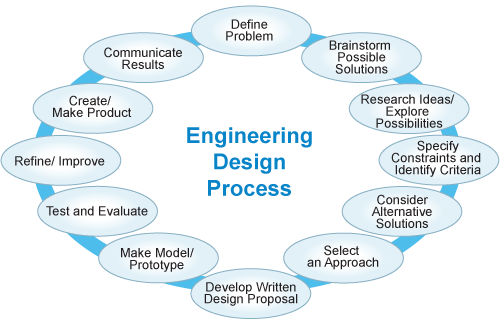
**Engineering Design Process: The Foundational Blueprint Shaping Modern Innovation** Why are so many professionals, educators, and innovators turning their attention to the engineering design process? It’s not just a technical workflow—it’s a structured approach to solving real-world problems, driving innovation, and delivering reliable solutions. In a world shaped by rapid technological change, the engineering design process is emerging as a vital framework for turning ideas into impact. The rise of this methodology reflects broader shifts across the US landscape—growing demand for smarter infrastructure, sustainable product development, and efficient system optimization. Whether in manufacturing, digital product creation, or public sector planning, professionals increasingly rely on this proven sequence to manage complexity and deliver quality outcomes. So, what exactly is the engineering design process? At its core, it’s a disciplined, iterative sequence consisting of five key stages: defining the problem, conducting research, generating ideas, prototyping solutions, and testing for improvement. This cycle ensures innovation is grounded in real needs, not assumptions. Each step builds on the last, fostering clarity, adaptability, and measurable progress. The process begins with deeply understanding the challenge—**why** the problem exists, who it affects, and what success looks like. From there, research uncovers constraints and opportunities, informing the exploration of multiple solutions. In the ideation phase, creativity meets practicality, encouraging diverse concepts before narrowing toward the most viable. Prototyping turns abstract ideas into tangible models, enabling early validation. Finally, testing reveals flaws and opportunities for refinement, reinforcing the iterative nature that makes this process so powerful.
Yet, understanding how it really works—and why it drives success—is critical. Many assume it’s a one-time linear task, but in reality, it’s an evolving cycle. Feedback at every stage fuels new iterations, making it inherently responsive to emerging data and changing requirements. This adaptability is particularly valuable in fast-paced environments where early mistakes can be costly. Despite its widespread benefits, common questions linger. What distinguishes engineering design from other problem-solving methods? It lies in its systematic approach—balancing creativity with analysis, and stakeholder input with technical rigor. Unlike quick fixes, this process builds resilience through continuous evaluation, reducing risk while maximizing relevance. Many also wonder about its limitations. The process demands time, collaboration, and resource investment—factors that may challenge fast-paced or low-budget projects. It’s not about perfection on the first try but about progress through refinement. Realistically, success depends on engaging the right teams and staying committed to iteration. Different roles and sectors find unique relevance in the engineering design process. Students develop foundational skills preparing for future innovation. Engineers and designers apply it daily in product development, infrastructure projects, and process optimization. Even policymakers and educators use insights from the framework to shape curricula and public initiatives. For those navigating this methodology, staying informed is key. Make use of trusted resources, workshops, and collaborative platforms to deepen understanding and apply the process effectively without misconceptions. The engineering design process isn’t a one-size-fits-all formula—it’s a flexible standard that evolves with real-world demands. As digital tools and data analytics grow integral, people increasingly seek intelligent systems that mirror this iterative excellence. For teams aiming to lead with clarity and impact, integrating the engineering design process offers a proven path—one that aligns curiosity, professionalism, and long-term value. In a landscape driven by innovation, the engineering design process stands as a cornerstone of reliable, forward-thinking progress. Its growing momentum reflects both a cultural shift toward methodical problem-solving and a practical need for quality in an ever-changing world. Understanding and applying this process isn’t just about creating better designs—it’s about building a foundation for smarter, safer, and more sustainable futures.
You Won’t Believe What Happened After Saying YesNM
You Won’t Believe What This Simple Trick Achieved—WWWW
You Won’t Believe What Happened at WVU MyChart – It’s Unbelievable!
